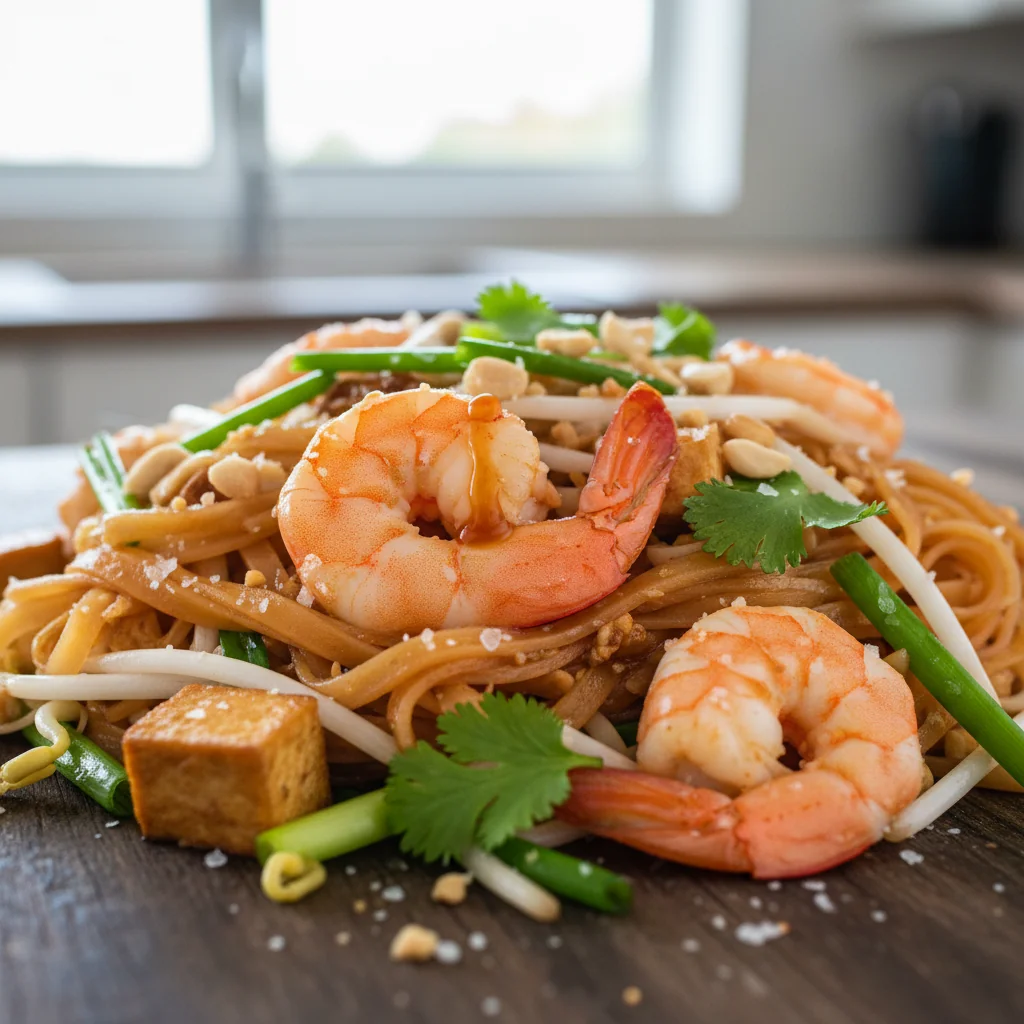
Pad Thai traces its modern roots back to post‑World War II Thailand, when the government promoted rice noodles to reduce rice consumption. The dish quickly became a street‑food staple, celebrated for its balance of sweet, sour, salty, and umami. It’s a simple yet iconic representation of Thai culinary ingenuity, and today it travels far beyond Bangkok’s bustling markets.
Why You'll Love It
-
- Ready in 30 minutes, perfect for busy nights
-
- Fresh, bright flavors that feel like a mini‑vacation
-
- Uses pantry‑friendly ingredients you likely have
-
- Flexible for veggies or protein swaps
“The flavors are spot on, and it didn’t take more than half an hour – pure joy!”
Essential Ingredient Guide
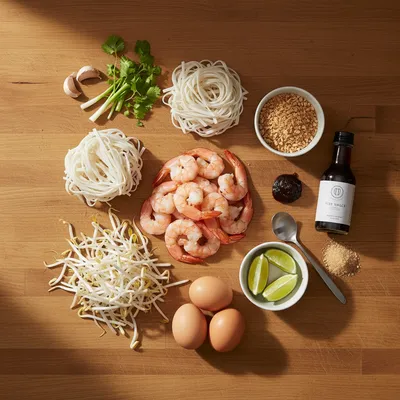
- Rice noodles: Soak in warm water until pliable; this prevents them from turning mushy when tossed.
- Shrimp: Choose large, peeled shrimp; pat dry to ensure a quick sear and firm texture.
- Bean sprouts: Add at the end for crunch; they keep the dish light and fresh.
- Tamarind paste: Provides the signature tang; a little goes a long way, balance with sugar.
- Lime juice: Finishes the sauce with bright acidity; squeeze right before serving.
- Brown sugar: Adds subtle sweetness; you can adjust to taste or swap with honey.
 International_Cuisine
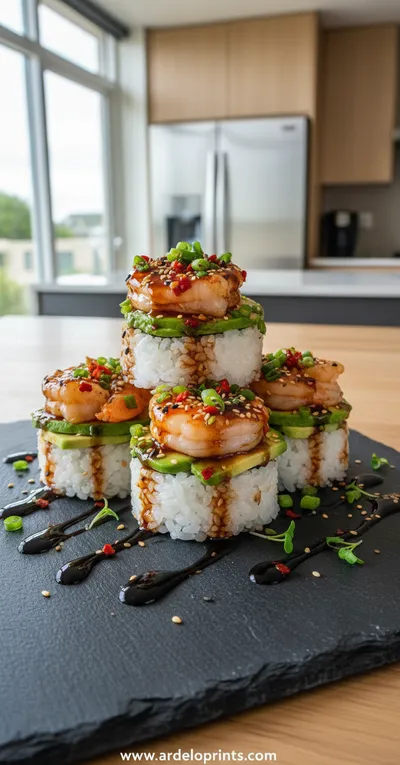
Spicy Shrimp Sushi Stacks
A fresh, vibrant bite combining seasoned shrimp, rice, and crisp toppings.
Complete Cooking Process
-
Ingredient Readiness:
Soak noodles, prep veggies, and season shrimp; everything should be within arm’s reach.
-
Flavor Development:
Sear shrimp, then deglaze with sauce to build depth before tossing noodles.
-
Texture Control:
Add bean sprouts and carrots at the last minute to keep them crisp.
-
Finishing Touches:
Stir in lime juice, peanuts, and fresh herbs just before plating.
-
Serving Timing:
Serve immediately while the noodles are warm and the sauce is glossy.
-
Use a hot wok; it creates that coveted wok‑kiss sear.
-
Keep a splash of water handy; it helps loosen the sauce without over‑cooking noodles.
-
Taste the sauce before adding noodles; adjust sweet‑sour balance early.
-
Garnish with extra peanuts and cilantro for crunch and freshness.
Pro Tips
Well, I’ve found that a few small adjustments can transform a good pad thai into a memorable one. So, take a moment to taste, adjust, and enjoy the process. It’s not just cooking; it’s a gentle pause in a busy day, a chance to breathe in the fragrant steam and smile at the simple joy of a well‑balanced dish.

The essence of the dish:
A harmony of silky noodles, plump shrimp, crunchy peanuts, and a sauce that is simultaneously sweet, sour, and a touch salty – that’s the heart of pad thai.
A fun fact or historical angle:
During the 1930s, the Thai government encouraged street vendors to serve pad thai to promote rice‑ noodle consumption, turning it into a national symbol of modern Thai identity.
Flavor or sensory focus:
You’ll notice the first bite is a bright tang from lime, followed by the nutty crunch of peanuts and the gentle heat of crushed red pepper.
You Must Know
-
Use tamarind paste for authentic sourness
-
Don’t over‑cook the shrimp – they turn rubbery
-
Prep all ingredients before the pan gets hot
Frequently Asked Questions
→ Can I use fresh rice noodles instead of dried?
Yes, fresh noodles require less soaking time; just blanch briefly and add to the wok.
→ What if I don’t have tamarind paste?
A mix of lime juice and a dash of brown sugar can mimic the tang, though the flavor will be slightly different.
→ How do I keep the noodles from sticking?
Make sure the noodles are well‑drained after soaking and toss them quickly with a little oil before adding the sauce.
→ Can I make this dish ahead of time?
Prepare the sauce and chop veggies in advance; cook shrimp and toss with noodles right before serving for best texture.
→ Is this recipe gluten‑free?
Use gluten‑free tamarind paste and rice noodles; the sauce is naturally gluten‑free.
→ What side dishes pair well with pad thai?
A light cucumber salad or a simple Thai mango salsa complements the flavors nicely.
Nutrition Facts
per serving
420
Calories
20g
Protein
55g
Carbs
14g
Fat
Taste Profile
A bright, balanced blend of sweet, sour, and savory notes.
Ingredient Substitutions
Don't have an ingredient? Try these alternatives
Adjust cooking time; tofu should be pressed and cubed, chicken diced.
Will be less fishy but still salty; consider adding a dash of mushroom sauce.
Recipe Variations
Try these delicious twists on the original
Spicy Version
Add extra chili flakes or a drizzle of sriracha for a noticeable kick.
Mediterranean Style
Swap peanuts for toasted almonds and add sliced bell peppers for a Mediterranean twist.
Common Mistakes to Avoid
Learn from others' mistakes for perfect results
- Over‑cooking shrimp, which makes them rubbery.
- Using too much sauce, turning noodles soggy.
- Adding bean sprouts too early; they lose crunch.
Meal Prep & Storage
Make Ahead Tips
You can prepare the sauce and chop the vegetables up to 24 hours ahead; store separately and assemble when ready to cook.
Leftover Ideas
Reheat gently in a skillet with a splash of water; add a squeeze of lime to revive freshness.
Perfect Pairings
Serve this with...
Cooking Timeline
Soak noodles, prep vegetables, and whisk sauce.
Sear shrimp until pink; set aside.
Stir‑fry carrots and onions, add noodles and sauce, toss.
Return shrimp, add bean sprouts, finish with lime and peanuts.
Plate immediately, garnish, and serve.

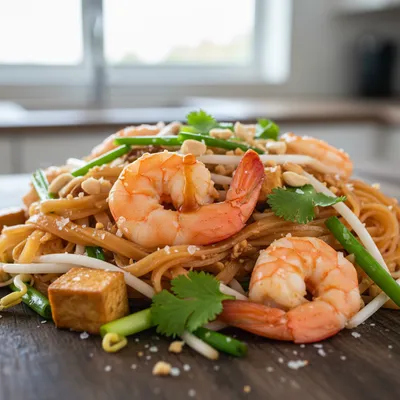
Shrimp Pad Thai – Easy 30-Minute Recipe
A bright, tangy shrimp pad thai that comes together in just half an hour. Fresh rice noodles, crisp veggies, and succulent shrimp mingle with a sweet‑savory sauce, making a quick, satisfying meal for busy evenings.
Timing
Prep Time
15 Minutes
Cook Time
15 Minutes
Total Time
30 Minutes
Recipe Details
Ingredients
Main Ingredients
-
01
8 oz dried rice noodles
-
02
12 large shrimp, peeled and deveined
-
03
2 tbsp vegetable oil
-
04
1 cup bean sprouts
-
05
2 green onions, sliced
-
06
1/4 cup roasted peanuts, crushed
Sauce
-
01
3 tbsp tamarind paste
-
02
2 tbsp fish sauce
-
03
1 tbsp soy sauce
-
04
2 tbsp brown sugar
-
05
1 tsp chili flakes (optional)
-
06
1 lime, juiced
Optional Add‑ins
-
01
1 cup shredded carrots
-
02
Fresh cilantro leaves
-
03
Extra lime wedges
Instructions
Soak the rice noodles in warm water for about 10‑12 minutes, until soft but still slightly firm; drain well.
In a small bowl whisk together tamarind paste, fish sauce, soy sauce, brown sugar, and chili flakes to create the sauce.
Heat 1 tbsp oil in a hot wok over medium‑high heat. Add shrimp, season lightly with salt, and stir‑fry 2‑3 minutes until just pink. Remove and set aside.
Add remaining oil, then toss in shredded carrots and the white parts of the green onions; stir‑fry for 1 minute.
Add the drained noodles and pour the sauce over them. Toss quickly, letting the sauce coat every strand.
Return the shrimp to the wok, add bean sprouts and the green onion greens, and give everything a final toss.
Remove from heat, stir in fresh lime juice, sprinkle crushed peanuts, and garnish with cilantro if desired.
Notes & Tips
-
1
If noodles become too dry, add a splash of warm water while tossing.
-
2
For extra heat, increase chili flakes or add a dash of sriracha.
-
3
Serve immediately for best texture; leftovers may become soggy.
 Dinner
Creamy Low Carb Chicken Casserole
Low‑carb, creamy chicken casserole that feels indulgent without the noodles.
Tools You'll Need
-
Wok or large skillet
-
Wooden spatula
-
Large bowl for soaking noodles
-
Measuring spoons
-
Sharp knife
Must-Know Tips
-
Don’t overcrowd the wok; cook shrimp in batches if needed.
-
Pat shrimp dry before searing to prevent steaming.
-
Taste the sauce before adding noodles; adjust sweetness or salt.
Professional Secrets
-
Use a very hot wok to achieve a slight char on the shrimp.
-
Add sauce gradually to control coating consistency.
-
Finish with a burst of fresh lime for bright acidity.

Recipe by
Luca Romero“Food is the world’s language. I bring global recipes to your kitchen — no passport required!” 🍜✈️
Get Delicious Recipes Weekly
Join 25,000+ home cooks getting our best recipes straight to their inbox.
Free forever • No spam • Unsubscribe anytime